How a Jacket Shoulder Seam Shapes Its Silhouette
Learn how a jacket shoulder seam shapes its silhouette, with clear checks for the sleeve, collar and movement to help you choose a line that suits your style.
How should a jacket shoulder seam sit, and what does its position tell you about the shape? A jacket shoulder seam is a useful clue to whether a garment reads as crisp, close, soft or deliberately broad. Compare where it meets the shoulder with the sleeve’s fall and the rest of the outfit; the label’s size alone tells you less about the silhouette.
Find the seam
The shoulder seam runs from the neck-side edge of the shoulder to the top of the sleeve. On a conventional set-in sleeve, it generally meets the shoulder near the point where the shoulder begins to slope into the upper arm. This placement gives a defined line without requiring the fabric to extend far beyond the body.
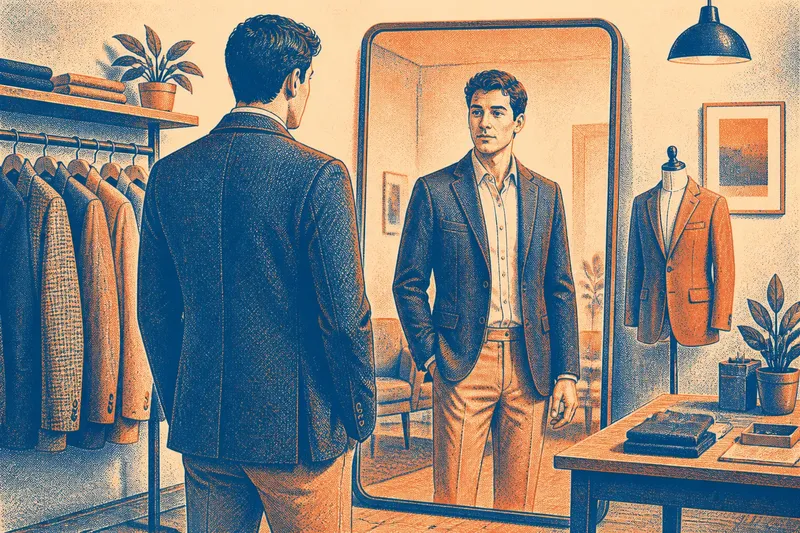
Stand in your ordinary posture, with your arms relaxed, and locate the seam on both sides. From the front, compare it with the outer point of your shoulder; from the side, see whether it follows the shoulder’s slope or sits on a raised ridge. A mirror helps you judge the line without pulling your shoulders back to alter it.
The seam is not the same as the sleeve head, the rounded area of fabric at the top of the sleeve. Padding or shaping can make the sleeve head look full even when the seam sits close to your shoulder point. The seam marks where sleeve and jacket body join; the sleeve head shows how that join has been shaped.
Read the silhouette
A seam near the natural shoulder point tends to preserve your existing outline. In a wool-twill blazer, for instance, a defined seam can give the upper body a direct, tailored appearance. That does not tell you whether the chest or waist is close-fitting: those parts of the jacket can still have room.
A seam beyond the shoulder point makes the sleeve begin farther out. This can create a broader, more relaxed outline, as in many dropped-shoulder or oversized jackets. The placement looks intentional when the sleeve, body and overall proportions work together; a seam extending beyond the shoulder is not, by itself, proof that the jacket is too large.
A seam inside the shoulder point can make the upper body appear narrower and the sleeve angle away more sharply. Some close-cut garments use this line deliberately. If the cloth pulls, the sleeve twists or reaching forward feels restrictive, the narrow silhouette may be limiting movement rather than simply expressing a fitted style.
These are visual tendencies, not rules. Padding, sleeve shape and cloth all affect the result: a soft linen jacket can hang differently from a structured wool blazer even when their seams meet at similar points. Colour and styling also change the impression. A dark, sharply tailored jacket may read as formal, while a relaxed cut in a softer shade can feel less severe.
Check sleeve and movement
Look at the sleeve immediately below the seam. A tailored jacket may have a small curve at the sleeve head, while a relaxed design may fall more loosely. In either case, check that the sleeve’s line makes sense with the shoulder and the jacket’s intended shape.
Diagonal drag lines from the sleeve towards the chest, or fabric bunching at the top of the arm, can signal that the shoulder and sleeve are not sitting comfortably together. They can also reflect posture or the way the jacket is hanging, so let the fabric settle and assess it in your usual stance before deciding.
Reach forward gently as if taking a book from a shelf, then let your arms rest again. The jacket should not pull sharply across your back or catch beneath your arm. A close cut may feel more fitted than an oversized one, but you should be able to move without fighting the garment.
Read the whole jacket
Consider shoulder placement alongside the collar, chest and sleeve length. If the back of the collar lifts away from your neck, the upper back may be sitting poorly; changing the shoulder line alone might not solve it. Likewise, a seam in the expected place cannot compensate for a front that pulls across the chest.
Think about the style you want to express. A softly sloped shoulder can suit an unstructured blazer, while a squared, padded shoulder can give a formal jacket a stronger line. Look for coherence: does the collar sit close, do the sleeves fall as intended, and does the shoulder look connected to your body rather than like a separate shelf?
Cloth affects how clearly you can read the seam. Stiff fabric holds its shape, while drapier material follows the body and can blur the join. In a textured or patterned jacket, trace the seam with your eye and use the sleeve’s fall and the side view as supporting clues.
Shoulder seam questions?
What does a dropped shoulder look like?
The seam sits below the natural shoulder point, so the sleeve begins farther down the upper arm. The outline often looks broad and relaxed, with a softer transition from body to sleeve.
Does the seam need to meet the shoulder tip?
No: that position is a reference for a conventional tailored shape, not a universal requirement. A dropped, padded or close-cut design may place the seam elsewhere to create its intended silhouette.
Can a tailor alter shoulder placement?
Sometimes, but shoulder and sleeve construction can make changes complex. Ask a qualified tailor to assess the garment and explain the realistic options before committing to an alteration.
Compare jackets fairly
Say you are choosing between a close-cut blazer and a relaxed jacket in a changing room. As an invented example, suppose both are worn over the same plain shirt and the goal is a softer everyday silhouette. First, stand naturally and note where each seam meets the shoulder point; next, view both jackets from the front and side; then reach forward gently and notice whether either pulls or catches. If the relaxed jacket’s broader seam, sleeve fall and comfortable movement look coherent, it better matches that stated preference; if it hangs awkwardly or restricts movement, the blazer may be the better choice despite its sharper outline.
- Check where the seam meets the shoulder point; if it aligns and you want a conventional tailored line, consider that shape, then compare the sleeve, or choose a deliberately dropped cut if you want a broader outline.
- Check whether padding creates a raised or squared edge; if it does and you want a formal, defined shoulder, keep it in consideration, or choose a softer construction for a less structured look.
- Check how the sleeve falls from the seam; if it hangs in a line that suits the jacket, keep assessing the fit, or try another cut if it twists or angles awkwardly.
- Check whether the collar stays close to your neck; if it does, move on to the chest and sleeves, or ask a qualified tailor to assess persistent gaping before considering alterations.
- Check how the jacket feels when you reach forward gently; if it moves without sharp pulling or catching, consider it for regular wear, or try a roomier cut if movement feels restricted.
- Check whether the front and side views tell the same story; if the silhouette looks intentional from both, compare it with your style preference, or keep looking if the shoulder appears detached from the rest of the jacket.
It is not worth scrutinising every wrinkle while a jacket is still on a hanger. A shoulder line can change once worn, and a fold may come from storage rather than fit. Judge the garment on your body before reading too much into a single crease.
Choose your shoulder line
Start with the outline you want: crisp and close, softly natural or broad and relaxed. Use shoulder-seam placement as one clue among several, then check the sleeve, collar and movement. The right line is the one whose construction feels coherent and suits how you want to dress.
If you are searching for how a jacket shoulder seam shapes a silhouette, compare its position with the sleeve’s fall and the jacket’s overall proportions. That combination helps you recognise the intended line and decide whether it fits your personal style.